What Amy DuBois Barnett Taught Us About Betting On Ourselves
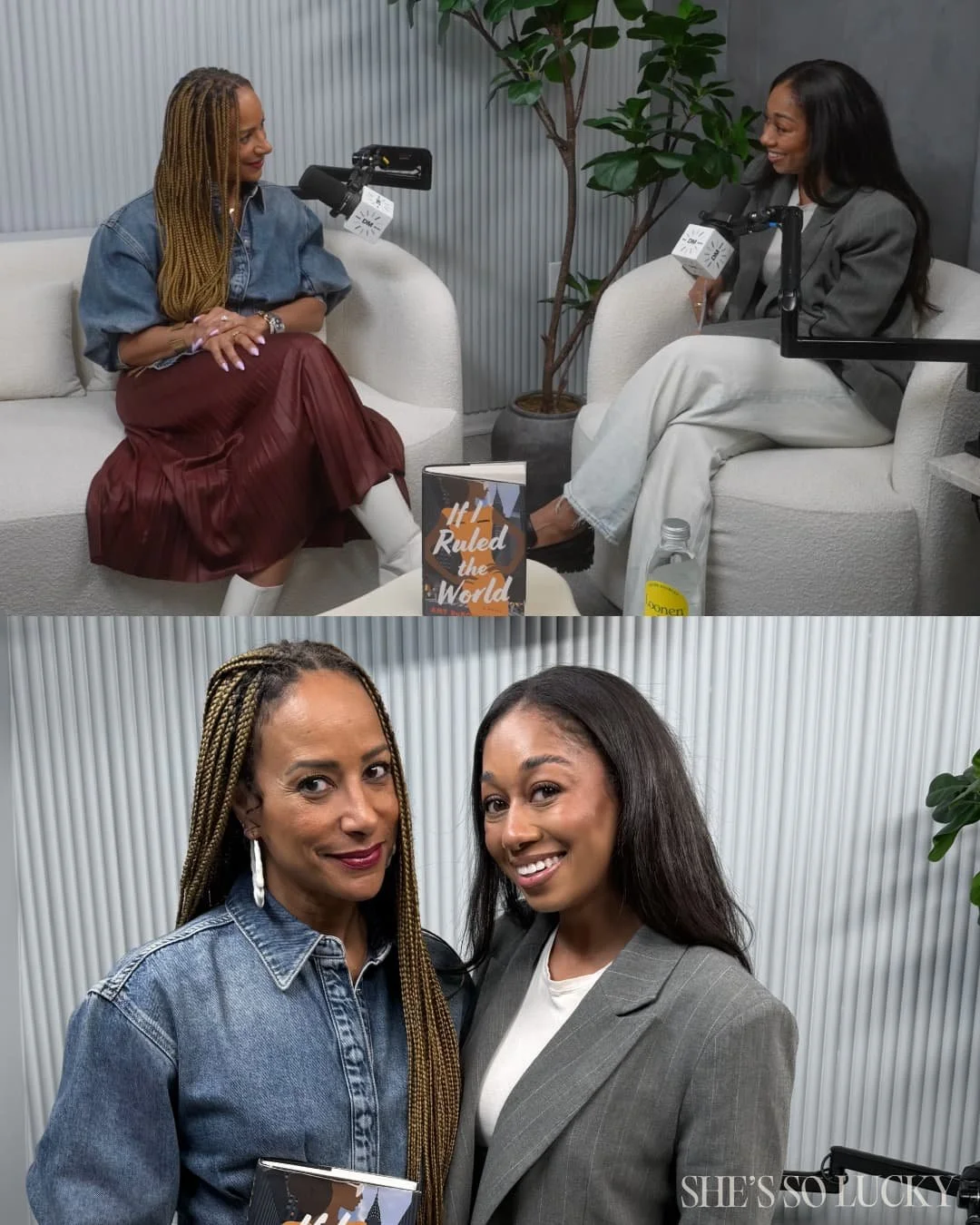
Amy DuBois Barnett started writing her debut novel in her thirties. She put it down, picked it up, put it down again, and finally finished it in her fifties after walking away from a 25-year career in corporate media. That novel, If I Ruled the World landed a two-book deal with Flatiron Books, and is now in development as a TV series with Lee Daniels at Hulu.
If you're looking for proof that betting on yourself works, Amy is Exhibit A. She joined us on She’s So Lucky to break down exactly how she thinks about risk, reinvention, and what it means to trust yourself enough to take the leap.
Fear Is the Signal, Not the Stop Sign
Amy's core philosophy is simple and a little counterintuitive: fear is growth. When you feel afraid, you're not approaching danger. You're approaching the edge of who you currently are. That reframe, she explained in the episode, is what has allowed her to take risk after risk throughout her career, from sticking her hand in a media executive's face in a lobby at 29 to walking away from a chief content officer role at 50 to write fiction.
The second piece of her philosophy is about deserving. Amy is direct about this: the universe does not give you opportunities you don't think you deserve. If you're walking around believing deep down that the promotion, the deal, the partner, or the creative life you want isn't really for you, no amount of hustle is going to override that belief. Betting on yourself, she said, isn't just about taking the external risk. It's about doing the internal work to believe you're worth the outcome you're chasing.
Together, these two ideas form a framework that Amy has applied to every major move in her career. They're not affirmations. They're operating principles she's tested over decades.
Self-Trust Comes from Loving the Whole Thing, Shadows Included
I asked Amy what it actually means to love yourself, because the phrase gets thrown around so casually it's stopped meaning anything. Amy's answer was more specific and more honest than the usual version. Loving yourself, she said, means loving all of yourself. Not just the parts that get praised or the parts that show up well on a resume, but the shadows too: the neurodivergent brain that can't focus, the failure that still stings, the season when the phone stopped ringing.
She made the point that we tend to think we're really living during the high moments, after the big achievement or on the vacation. But the losses, the disappointments, the hard seasons, those are also living. They're actually what makes you more layered, more insightful, more capable of handling what comes next. When you can hold that perspective, the shadows become part of the foundation rather than evidence against you.
This connects directly to the self-trust Amy described. When you've accepted all of yourself, including the parts you're still working on, you have a stable enough base to walk out on a limb and know you've got yourself. That's what made it possible for her to turn around in that lobby. To leave corporate media without a safety net. To bet on a 15-year-old manuscript.
The Quiet Season Teaches You Who's Actually in Your Corner
One of the most striking moments in the conversation came when Amy talked about what happens when you go from a highly visible, high-status job to a quieter season. She was unsparing about it: a lot of people stop calling. The relationships that felt real reveal themselves as transactional. And that, she said, is clarifying.
She got personal here, mentioning her father's emergency open heart surgery, the five months she spent navigating his recovery and relocation, the deadlines she fell behind on, the cost that never showed up anywhere on social media. The people who remained present through that season, who called not because she had a title but because they loved her, are the ones who matter.
For anyone in a quieter chapter right now, whether by choice or circumstance, Amy's perspective is worth sitting with. The quiet season isn't a detour from your story. It's the part that shows you who you are and who your people actually are. That kind of clarity is worth something.
Some Stories Need Time to Become What They're Meant to Be
Amy wrote the first 100 pages of If I Ruled the World almost 20 years ago. She set it aside to write a nonfiction book, got pulled into demanding executive roles, picked the manuscript up and put it back down more times than she could count. When she finally finished it in 2023, she was clear-eyed about why it couldn't have been the same book earlier.
She didn't have the language for it at 35. She hadn't yet developed the evolved perspective needed to write honestly about misogyny threaded through hip hop culture and urban media in the late nineties, about the cost of ambition, about what it means to become a woman on your own terms. She needed all the years in between, all the jobs and failures and quiet seasons, to write the book the story actually required.
And then, almost accidentally, the timing landed. By the time the book came out in 2026, people were obsessed with the nineties, the music industry was facing a reckoning, and the themes Amy had been sitting with for two decades were suddenly urgent in the culture. She couldn't have planned it. She just trusted the story and finished it when she had enough to give it.
For anyone sitting on a creative project, a business idea, a pivot they keep putting down and picking back up: Amy's story is not permission to wait indefinitely. It's a reminder that sometimes the delay is the development. Some things need the version of you that exists on the other side of everything you've been through.
The full conversation with Amy DuBois Barnett is She's So Lucky episode 347. Listen wherever you get your podcasts, and pick up If I Ruled the World at your local bookstore or wherever you buy books.