When Walking Away Is the Win: What Essence Iman Teaches Us About Knowing When a Chapter Is Done
There's a version of the entrepreneurship conversation we have over and over again — push through, stay the course, keep going — and while there's real truth in that, it leaves something important out. What happens when you've done all of that, built something real, and then realized you're just... done? Not burned out, not failing, not in crisis. Just done.
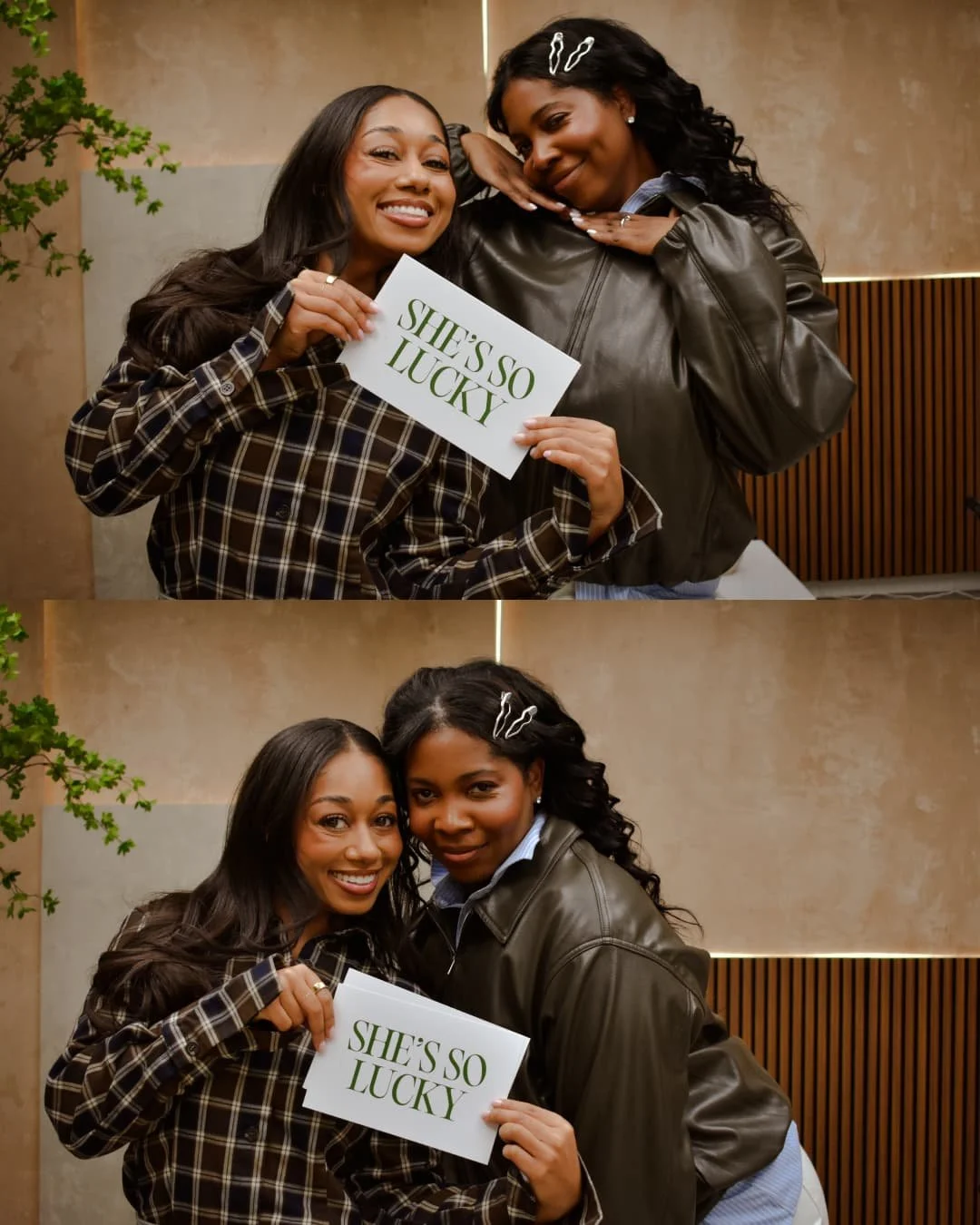
That's exactly where Essence Iman found herself with her award-winning body care brand The Established, and it's the conversation that anchored the final episode of our Business of You series on She's So Lucky.
Building Something Real — Then Choosing to Walk Away
Essence started her brand with $200 and no background in beauty. She tinkered with ingredients, formulated her first product, built a community around it, won awards, and earned real industry recognition. By every external measure, she was winning. And then she walked away from it, intentionally and at peace, with a trip to Italy already on the calendar.
The question everyone wanted the answer to was: why? What went wrong? What was the catastrophe? Essence's answer was simple — there wasn't one. She just didn't feel like doing it anymore, and she decided that was reason enough.
That framing alone is worth sitting with, because so many of us have been conditioned to believe that walking away from something we built requires a dramatic inciting incident to justify it. It doesn't. Sometimes a chapter just ends, and the healthiest thing you can do is let it.
What the Founder Mentality Actually Means
One of my favorite parts of this conversation was Essence breaking down what it really means to think like a founder, and why that mindset is useful for everyone, not just people running businesses.
Founders think in chapters. They treat their careers like a portfolio rather than a single path they have to stay on. They're comfortable with evolution in a way that a lot of us aren't because we've been told that changing direction means we failed at the original one.
Adopting the founder mentality doesn't require a business. It just requires giving yourself permission to treat your life like something you're actively building and redesigning, rather than something that's happening to you.
You Got Here Because You Knew What You Were Doing
This is the line from the episode that I keep coming back to. An investor stopped Essence mid-conversation once and told her: stop telling your story like you had no power over the circumstances that brought you here. You got here because you knew what you were doing, period.
Imposter syndrome gets talked about a lot, but what we talk about less is the specific habit of narrating our own success as though it was luck or accident or something that just happened to fall into our laps. When you do that, you give away authority you earned. You also make it very hard for the people who might want to invest in you, collaborate with you, or champion what you're building to actually trust you.
If you're in the room, you belong in the room. Own it.
The Takeaway
Not everything has to be forever to count as a success. A business that you started with $200, scaled into something award-winning, and then intentionally closed is not a failure story — it's a full one. And knowing when you're done is its own kind of wisdom.
The full conversation with Essence Iman, including our deep dive into the beauty industry and the Slutty Founder Rapid Fire, is live now on She's So Lucky.